The City That Printed Spain's First Book
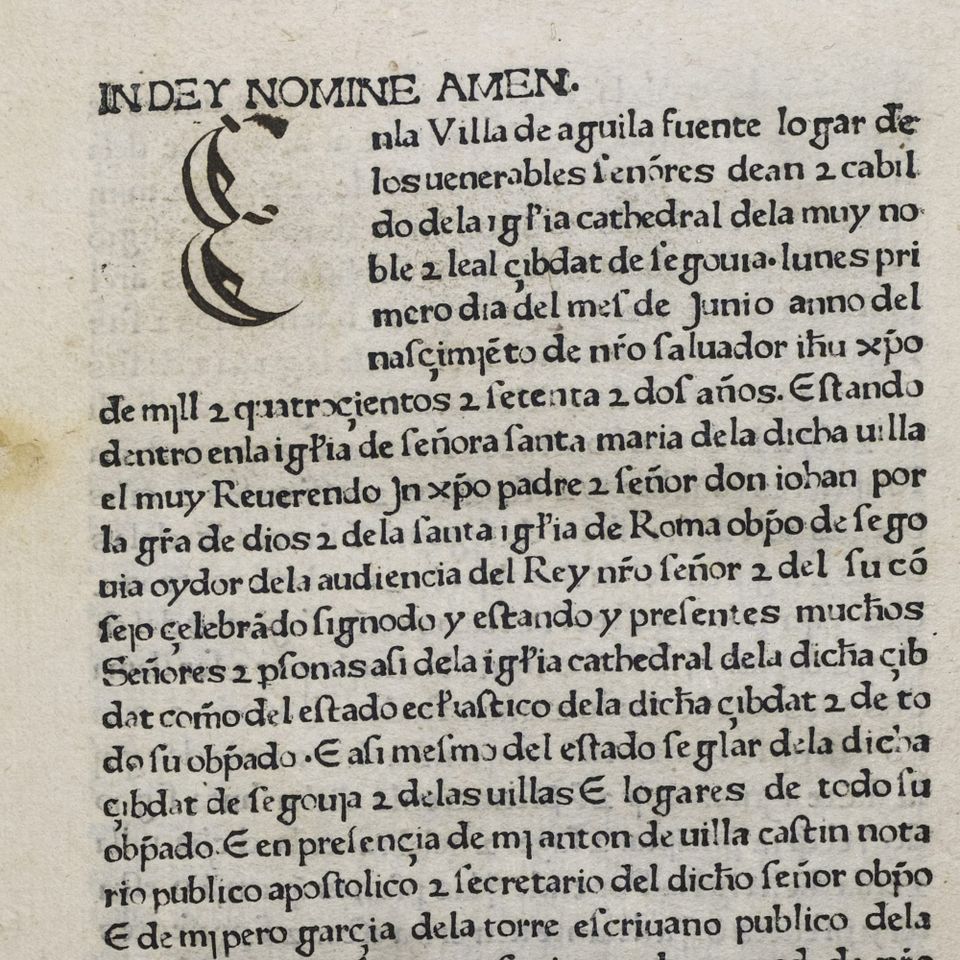
In 1472, a German printer and a Castilian bishop helped bring a European revolution in the circulation of knowledge to Segovia. The evidence survives in a remarkably unshowy book.
Spain’s first known printed book was not an epic, a royal chronicle or a lavishly illustrated work intended to astonish its readers. It concerned the decisions of a church meeting. Its importance lies partly in that modest purpose: a new technology had arrived to do a practical job.
The Sinodal de Aguilafuente takes its name from the town where the synod met, but it was printed in Segovia. That distinction restores the city to a larger European story. Here, in 1472, the ability to reproduce a text through movable type was becoming a tool of administration, instruction and authority.
Only one copy of the edition is known to survive, preserved by Segovia Cathedral. It is a slender witness to an enormous change. The distance between a meeting and its readers could now be crossed through a repeatable process of production, rather than by copying each complete text by hand.
A bishop with a reason to print
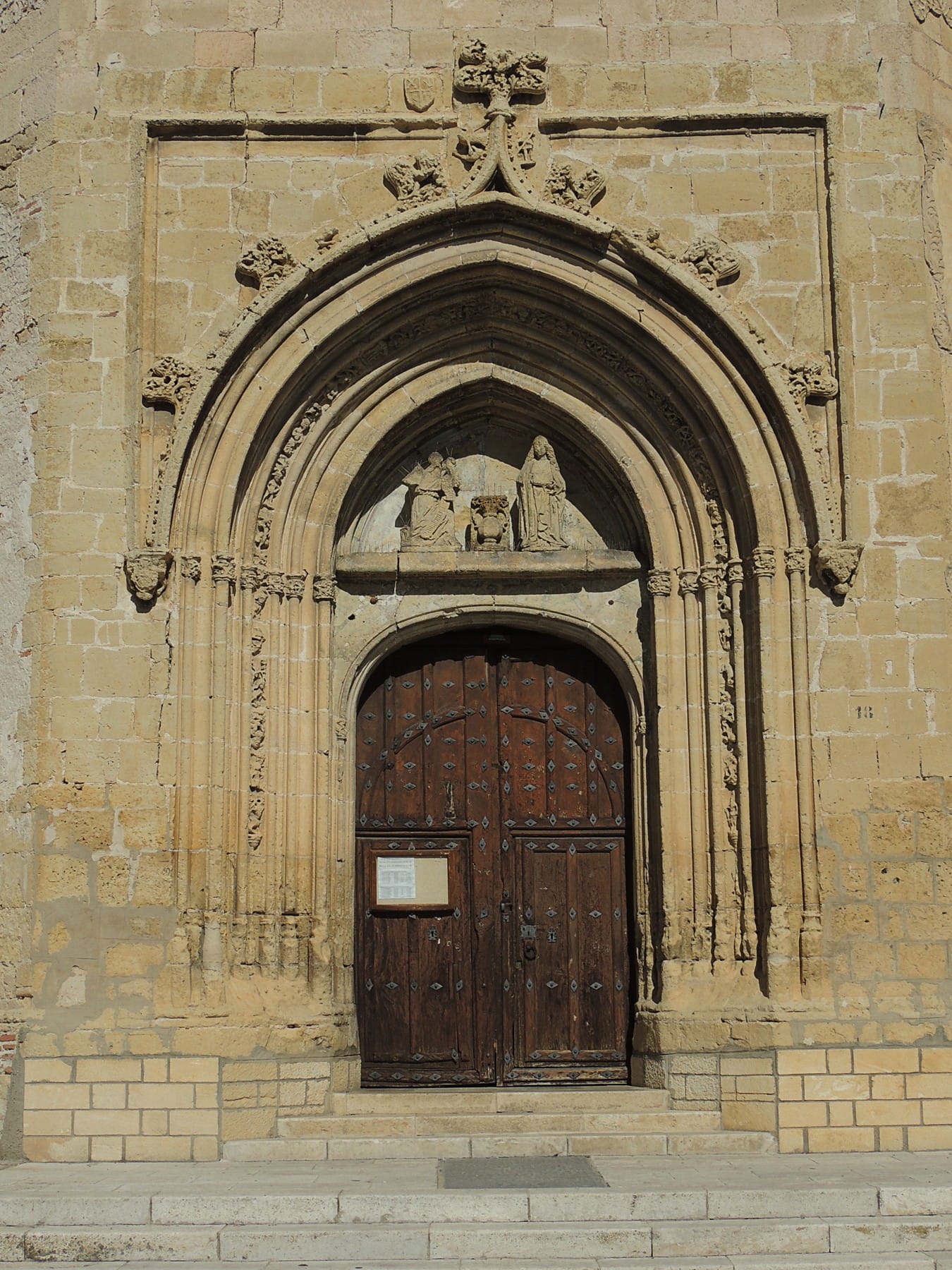
As the cathedral’s account explains, Bishop Juan Arias Dávila convened the synod in the church of Santa María in Aguilafuente from 1 to 10 June 1472. Its decisions addressed religious life and reform. Printing offered a way of giving those decisions a material form that could travel beyond the gathering itself.
This was not the opposite of intellectual ambition. Institutions need texts: rules to consult, arguments to study and instructions to communicate. The bishop’s interest in the press connected an immediate religious purpose with a technology whose wider consequences could not be contained within that purpose.
The setting also complicates an easy story about progress. In fifteenth-century Castile, knowledge and authority were closely entangled. A bishop’s patronage could enable technical innovation while directing it towards the governance of a diocese. The press did not arrive outside the existing order. It entered through people who had reasons — and resources — to use it.
Heidelberg, Rome, Segovia
The printer was Juan Párix, known in Latin as Johannes Parix, from Heidelberg. Research presented by the Complutense University’s historical library places his route to Segovia through Rome and identifies a small group of editions produced in the city during the 1470s. His work included religious and legal texts, rather than a single isolated experiment.
That journey matters. Printing spread through the movement of skilled people as well as through the movement of books. A press required knowledge of type, ink, paper, composition and the organisation of work. A patron could recognise an opportunity; a printer had to make it function.
Segovia therefore belongs on a map of exchange linking German-speaking lands, Italian centres of book production and the Iberian Peninsula. The city was not merely receiving a finished cultural product from elsewhere. For a time, it was a place where such products were made.
Other surviving works help establish that picture. The Complutense’s Modus confitendi, associated with Párix’s Segovian workshop, gives scholars another object to compare. Typefaces, page arrangement and printing habits can supply evidence where a modern reader might expect a straightforward publisher’s imprint.
Reading a book without a modern title page
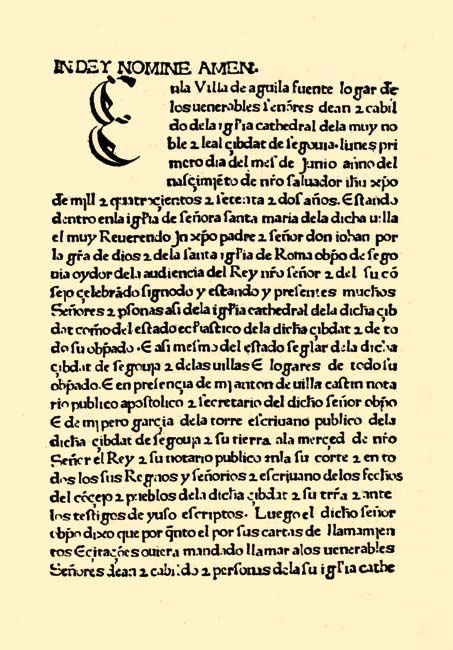
The Sinodal does not introduce itself in the way a contemporary book would. The cathedral records 48 printed leaves and 14 blank ones, with pages measuring approximately 235 by 175 millimetres. Its Roman type is arranged in lines of dense text. There is no modern title page conveniently setting out printer, place and publication date.
For a historian, these absences create work rather than diminish the object’s significance. The identification of early printing depends on material comparison, documentary research and the careful history of surviving copies. “First known” is the appropriate formulation: it recognises what the evidence supports without pretending that every book ever produced has survived.
The cathedral credits its archivist Cristino Valverde’s 1930 catalogue with bringing renewed scholarly attention to the volume. A book can be physically preserved yet remain insufficiently understood. Recognising what it is becomes another stage in its history.
What movable type changed
It is tempting to imagine a clean break: manuscripts on one side, printed books on the other. The Complutense’s history of printing offers a more useful perspective. Early printed books retained conventions familiar from manuscript culture. Readers were encountering a changed method of production within forms they could still recognise.
The decisive advantage was repeatability. Once a page had been composed from movable type, multiple impressions could be made. Preparing an edition involved substantial work, but that effort could serve many copies. Printing altered the economics and potential reach of a text, even though books did not suddenly become affordable to everyone.
It also changed the possibilities of comparison. Readers in different places could work from copies of the same edition. Teachers, lawyers and religious institutions could circulate material with a degree of consistency that mattered to their purposes. Errors remained possible; the new process could reproduce them too. Multiplication was a power, not a guarantee of truth.
Nor did wider circulation automatically mean freedom from control. The same technology could spread an argument or reinforce an institution’s rules. The Sinodal is an especially clear reminder that the history of publishing includes the organisation of authority as well as challenges to it.
A small object, a larger city
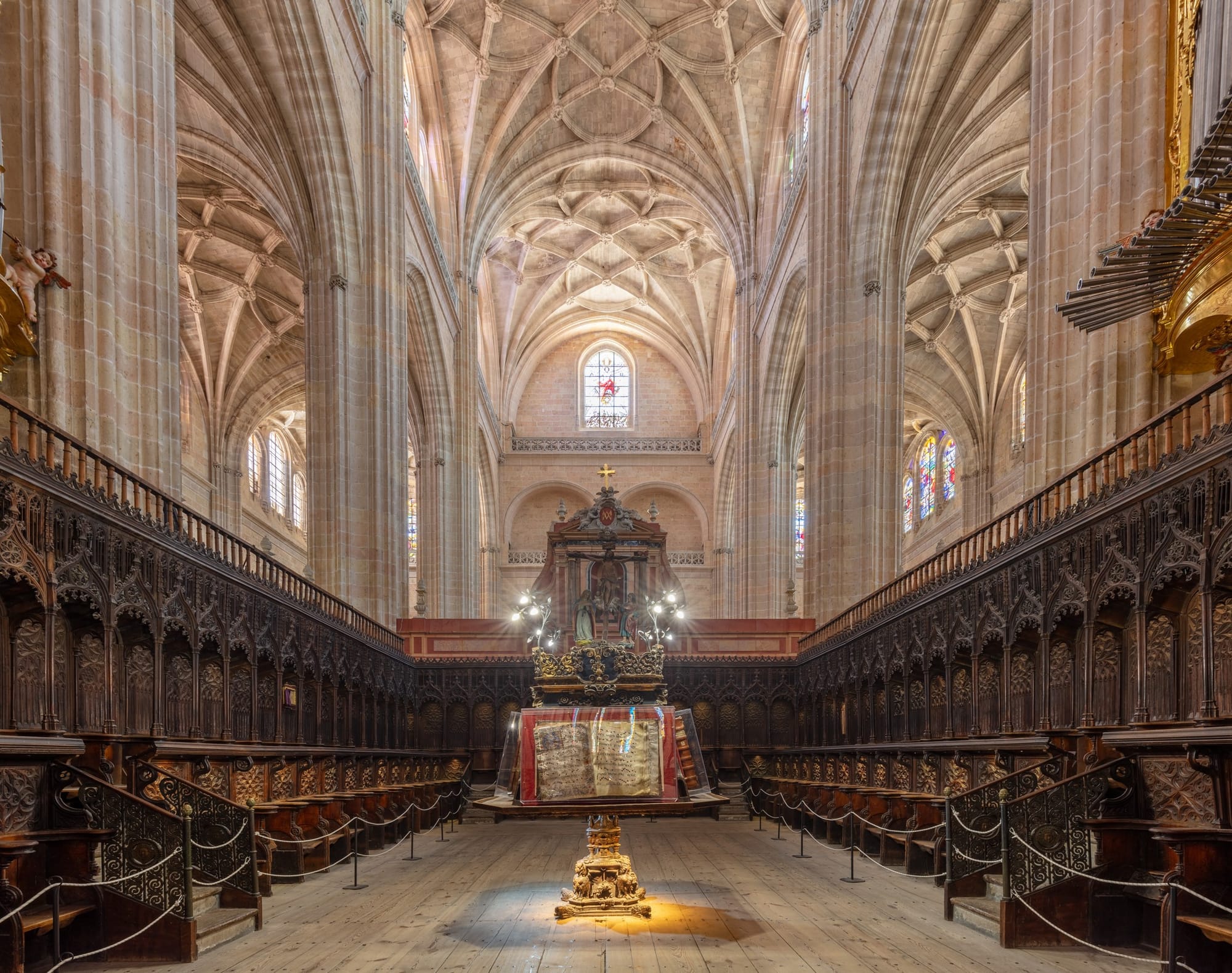
The surviving copy belongs to the cathedral’s collections; visitors should consult the cathedral about opportunities to see it rather than assume it is permanently on public display. Its physical vulnerability is part of what makes preservation important. The countless encounters made possible by printing can leave very few original objects behind.
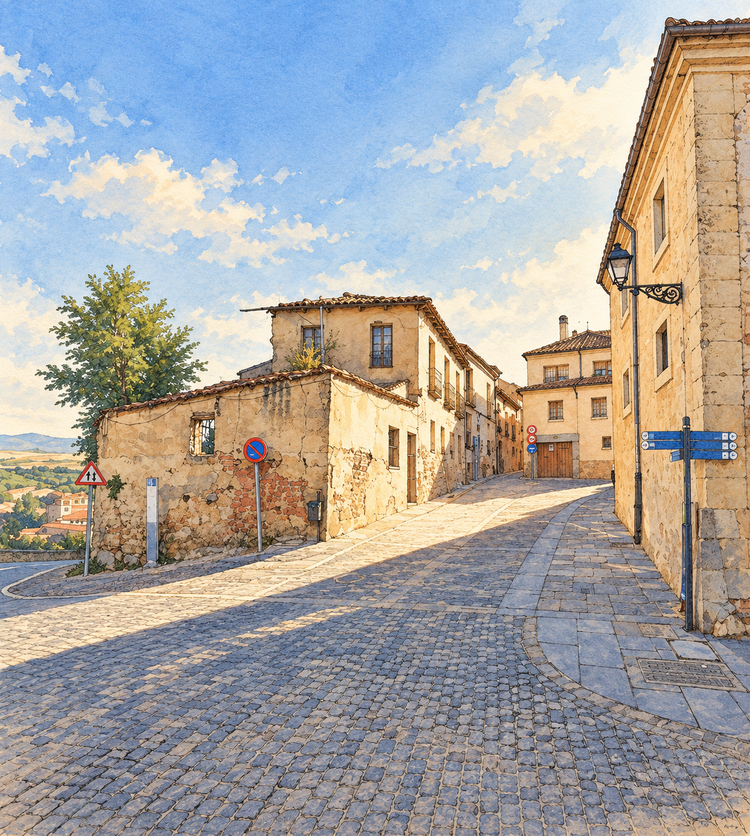
Segovia is often read through the scale of its architecture. This story asks for a different adjustment of attention: from stone to paper, from a skyline to lines of type. A city’s place in history can depend on the arrival of a craftsperson, the intention of a patron and a practical decision to reproduce a text.
In 1472, those elements came together here. The result was a church document. The larger consequence was Segovia’s participation in a European transformation of how knowledge could be made, carried and shared.


Member discussion