Walking with Giants: Antonio Machado’s Poetic Footsteps through Segovia
A rented room. A university for the people. A riverbank with room to think. Follow Antonio Machado into the quieter heart of Segovia.
Segovia knows how to command attention. The Aqueduct fills the sky. Towers rise above tiled roofs. Yet Antonio Machado’s story begins somewhere smaller: a rented room on a quiet street.
Between 1919 and 1932, the poet lived here while teaching French. He helped bring education to ordinary people. He walked beside the Eresma. The city became part of his working life, his friendships and his imagination.1
This walk follows those traces. Some poems name Segovia directly. Others accompany the streets through their images of windows, towers and childhood. Read them as invitations to look more closely.
A small room,
a wider world
Poetic companion: “Para tu ventana”
Begin at 5 Calle de los Desamparados. Away from the monumental city, Segovia shrinks to a more intimate scale: a doorway, a window, a wall warmed by the sun.
Machado arrived in November 1919. Soon afterward, he settled in the boarding house run by Luisa Torrego. He kept a room here until 1932—almost thirteen years in a home whose modest surroundings survive in the museum.1

Inside, resist the urge to hurry. Notice the furniture and the room’s proportions. Fame did not require grand surroundings. The house also preserves images of Leonor, his late wife, and Guiomar, his later muse. Private feeling enters a place otherwise defined by restraint.
Carry “Para tu ventana” into the nearby lanes. Its speaker searches a maze of streets for a beloved window, with roses in hand. Let the poem shape your attention without assigning its imagined window to a particular façade.
Outside, walk slowly. A window can hold you as completely as a cathedral.
Poetry with
a public purpose
Poetic companion: “La plaza tiene una torre”
Walk toward Plaza de San Quirce, a short journey through the old town. Stop before the former Romanesque church. Look up at the tower.
Here, Machado’s story becomes a shared endeavor. In late 1919, he joined the founders of the Universidad Popular Segoviana. Their ambition was to bring culture and education closer to people with limited opportunities for study.2

The university acquired San Quirce in 1927, rescuing a church that had become a barn and warehouse. Machado gave fifty books from his collection to its circulating library. Today, the building houses the Real Academia de Historia y Arte de San Quirce.2
“La plaza tiene una torre” moves from square to tower, from tower to balcony, then inward to a person and a flower. Read it here as an exercise in attention. Begin with the architecture. Then consider the people who made it useful again.
while you watch the people.
The city at play
Poetic companion: “Pegasos, lindos pegasos”
Return toward Plaza Mayor, then follow Calle de Juan Bravo downhill to San Martín and the nearby Plaza de las Sirenas.
The street opens into terraces, steps and stone façades. Café voices drift across the square. Footsteps interrupt them. If children are playing, their movement changes the whole scene.

This is a place to sit.
“Pegasos, lindos pegasos” remembers wooden carousel horses, a festive night and childhood happiness bought with a copper coin. The poem recalls the speaker’s childhood; it is not documentary evidence of children playing in this particular square.3
Still, it changes how you look. Around San Martín, the weight of old stone meets the passing life of the street. Someone crosses the paving. A voice calls from a table. The moment passes, leaving the square briefly different.
Love measured
in stone
Literary connection: “El acueducto romano”
Continue down Calle de Juan Bravo and along Calle Cervantes to Plaza del Azoguejo.
The Aqueduct arrives with theatrical force. One moment you are following a street. The next, granite arches occupy the sky. Stand beneath them. Look at the openings as well as the stone.

In the short lyric beginning “El acueducto romano”, published in Nuevas canciones (1924), Machado connects the structure’s firmness to the strength of mutual love. Roman engineering becomes a measure of human attachment.4
Look up at the stones. Think of something precious that you hope will endure. The poem asks little more of this encounter.
A book beside
the water
Literary connection: “El Milagro”
Now leave the busiest stage. Head toward Calle de San Juan, descend toward the Eresma valley and follow the riverside paths toward Alameda del Parral. Use a pedestrian map for this longer leg.
The soundscape changes. Traffic recedes. Water and leaves take over.
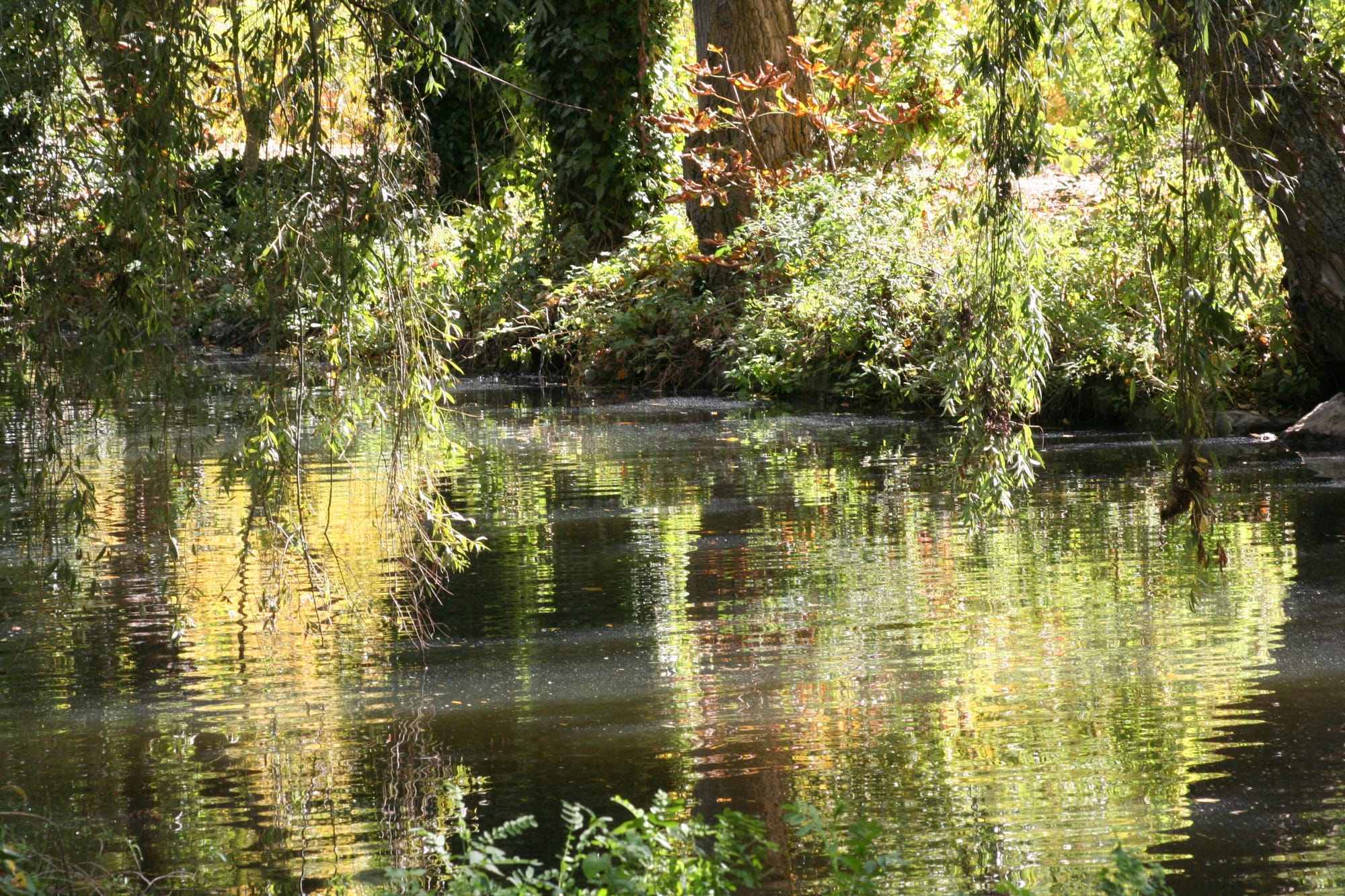
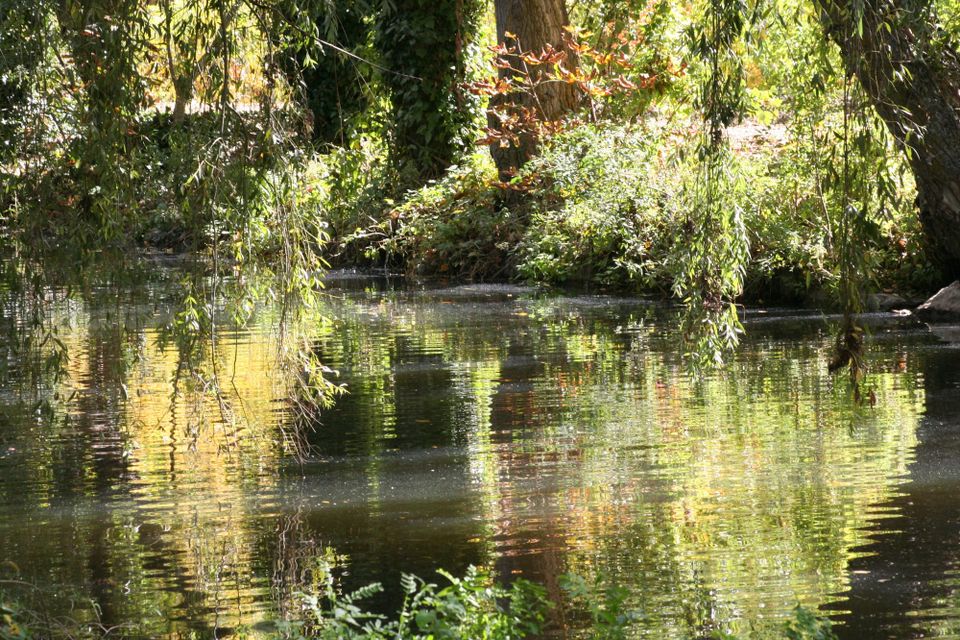
Machado regularly walked in this landscape. The municipal tourism account describes afternoons after teaching: sitting beside the river, rolling a cigarette, reading and making notes. It also recounts his joke that opening his boarding-house window could warm the room because outside was less cold.5
Those accounts establish a cold room and habitual walks. His poem “El Milagro” supplies the Bible: its speaker walks through Segovia’s riverside alameda and reaches for his glasses to read it. Missing spectacles turn the outing into a playful meditation on sight and belief. A poem offers a scene, however, rather than proof that he read the Bible here every day.4
Bring a book of your own. Find a seat. Read a page, then look up. The river gives the walk its breathing space.
Then look up.
Hope takes root
Literary connection: “A un olmo seco”
Head toward the Casa de Moneda area, then climb toward Puerta de Santiago and the Jardín de los Poetas. The ascent returns you to the city walls. The valley opens below.
Here, a commemorative elm links Segovia to “A un olmo seco”, Machado’s poem about an ailing tree in Soria. Written in 1912, before Leonor’s death, it finds new green leaves on a damaged trunk. A small sign of renewal carries an enormous emotional weight.
Segovia planted its elm in April 2014. It came from a cutting of an elm in Adolfo Sastre’s garden in Getafe, itself derived from the famous Soria tree. The connection passes through successive propagation: a living lineage carried between cities.6
Look for the commemorative plaque. Then look at the tree. The poem holds hope against loss. Beside the walls, that hope takes a living form.
Your walk began with a room. It ends with something growing.


Member discussion