Torreón de Rueda: A Bookshop Worth Getting Lost In
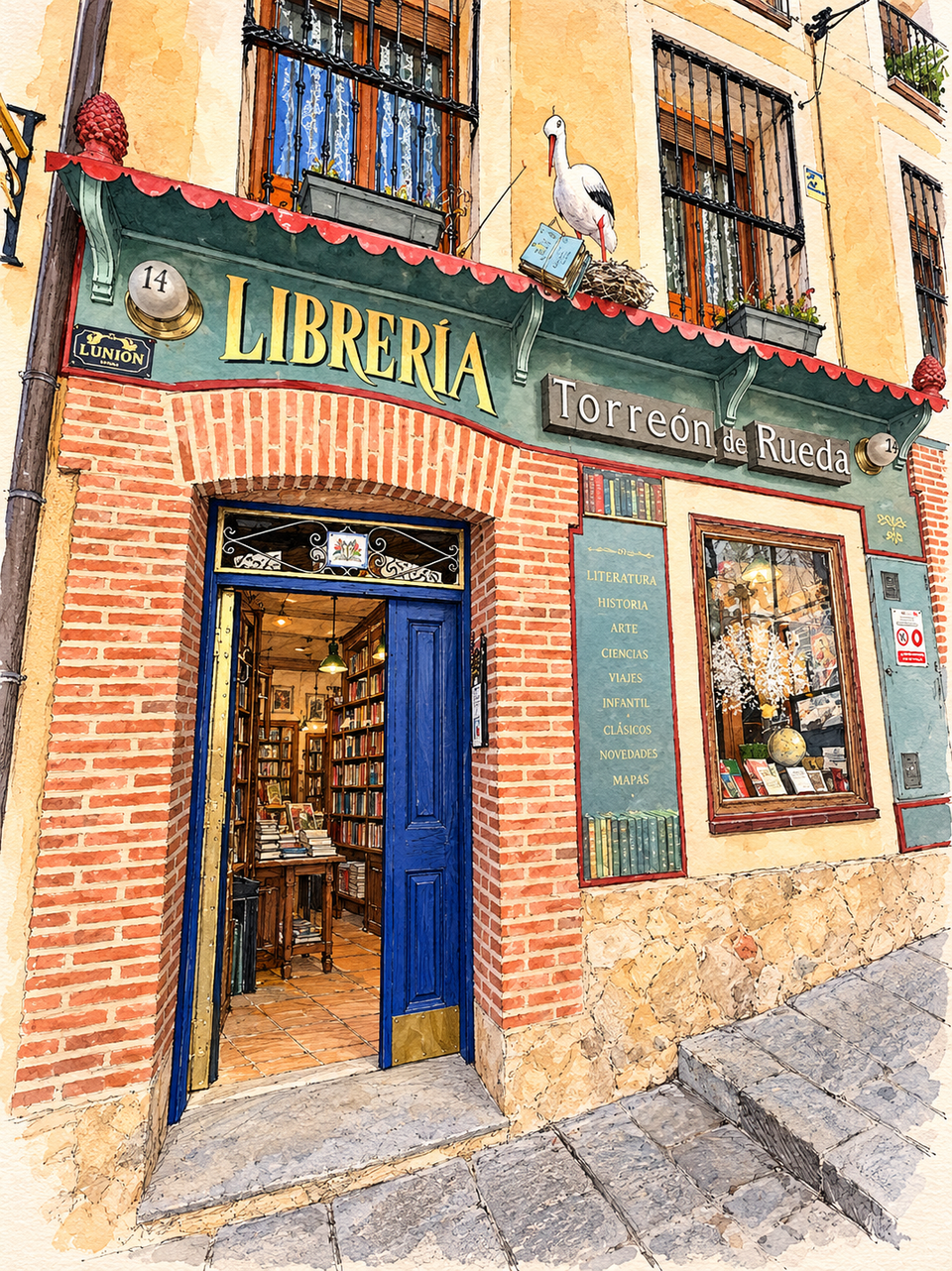
On Calle Grabador Espinosa, old books, vintage objects and the pleasure of browsing offer another way into Segovia’s cultural life.
The smell arrives before the browsing begins. Even from outside Torreón de Rueda, old books announce themselves: an invitation that has little to do with a new release or a carefully timed purchase. Tucked away from the crowds circulating through Segovia’s main tourist streets, this bookshop feels like a small refuge.
That is a personal impression, not a promise that the shop will always be quiet. What matters is the change of attention. Beyond the familiar movement through the city’s landmarks is a place where looking can become an activity in its own right. You need not arrive knowing exactly what you want.
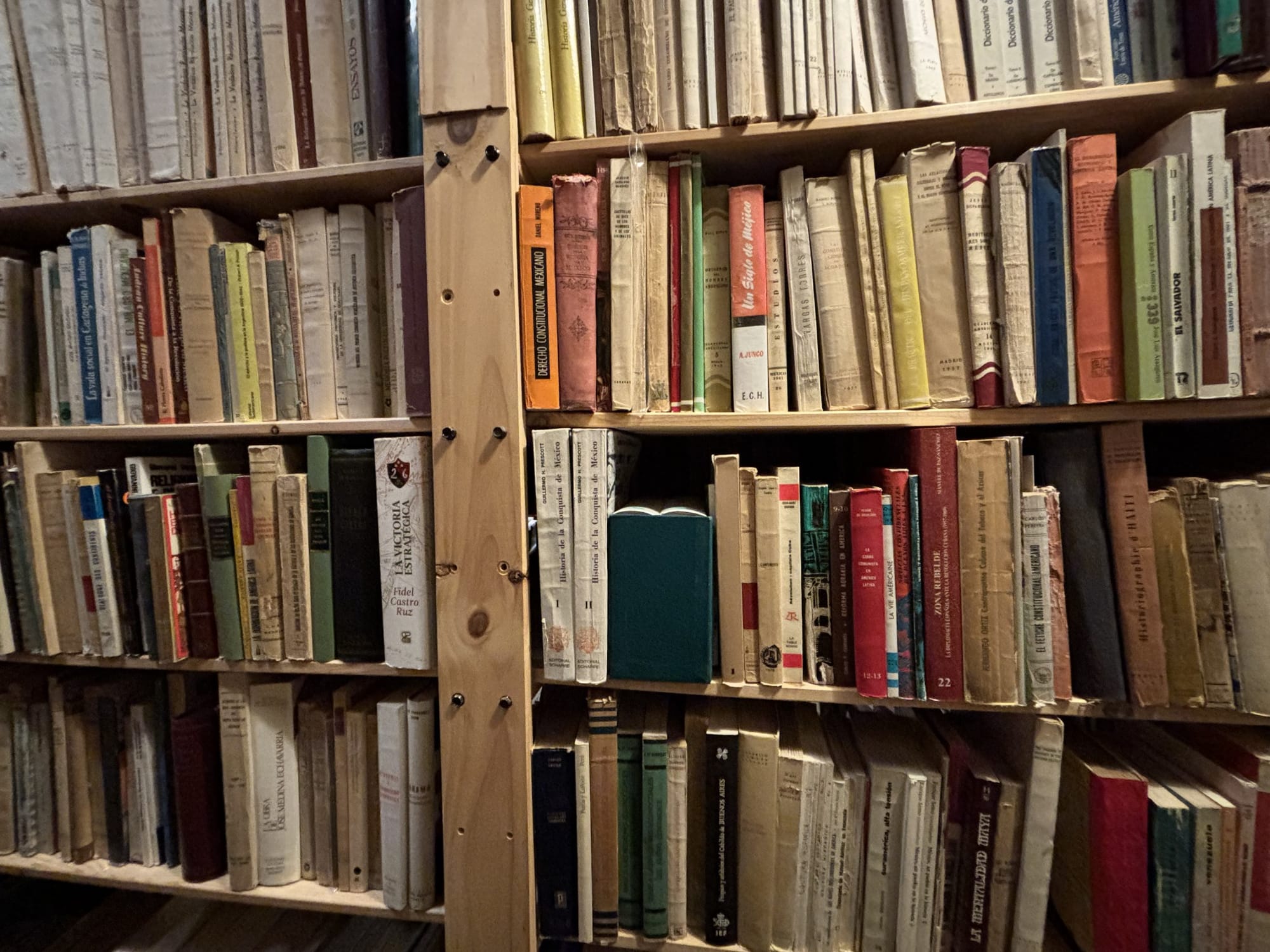
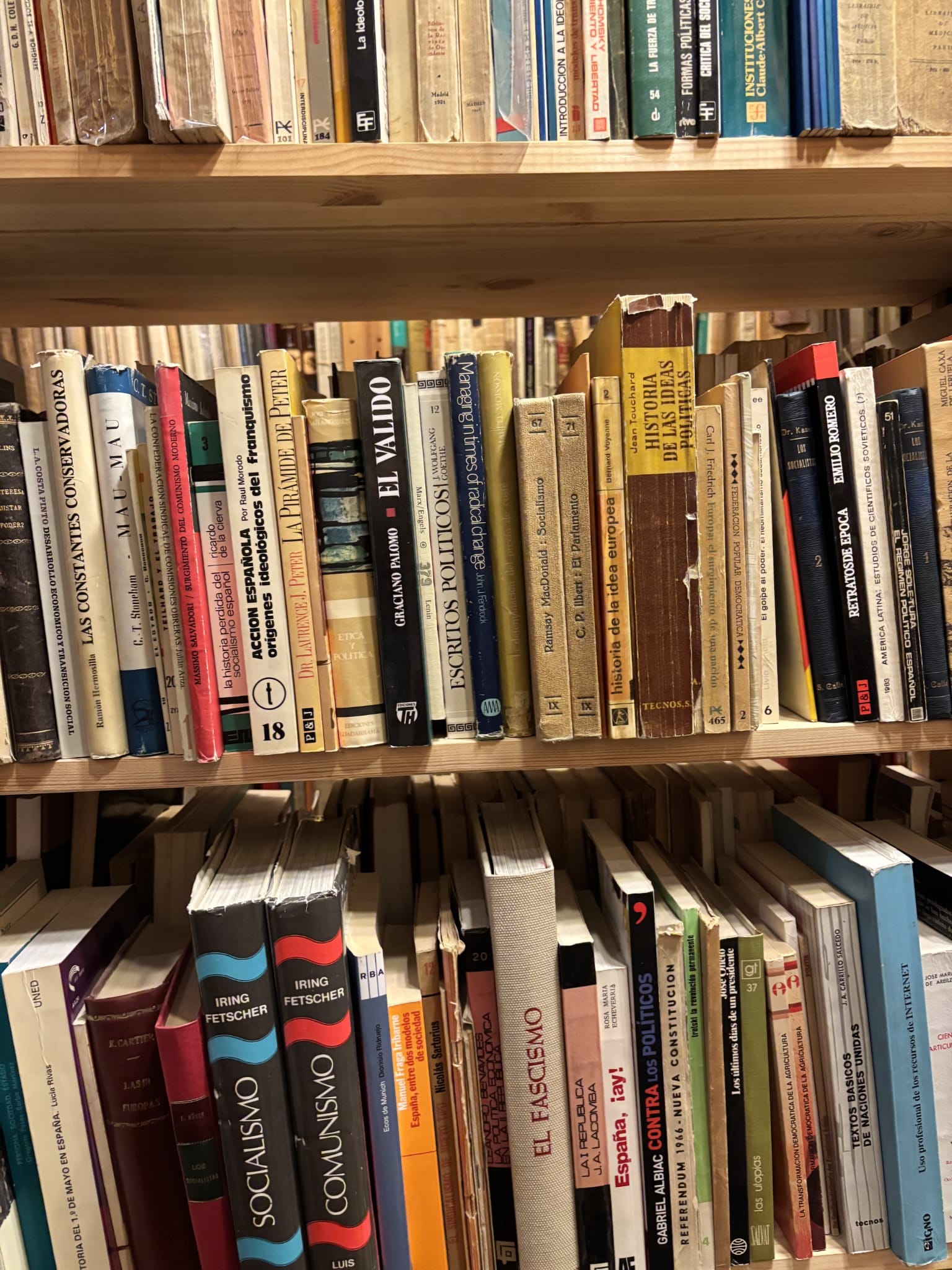
Inside, shelves and narrow passages hold books on numerous subjects, mostly in Spanish. It is easy to imagine losing hours here — or simply to allow those hours, without treating them as lost. A spine suggests one direction; another shelf interrupts it. The point is not necessarily to emerge with the title you had in mind.
A name carried from another address
The shop’s history gives that sense of accumulated discovery a more concrete foundation. Its bookseller profile on IberLibro dates the business to 1991 and describes an initial stock drawn from a personal collection of roughly 2,000 books. The name recalls the tower of the Casa de Rueda, its original home, rather than the address at which visitors find it today.
A 2021 account in El Adelantado de Segovia identifies the founder as César Gutiérrez. It traces the beginning to Calle Escuderos and records the shop’s subsequent moves, including a period in Pedraza. By the time of that report, Gutiérrez had retired and his son Fernando was running the business. That is a documented moment in its history, rather than a fresh interview or a claim about its staffing today.
The distinction between a shop and its premises is useful here. Businesses move; a name, a body of knowledge and the habits of buying and selling can travel with them. Torreón de Rueda’s identity is not confined to the building in which it began. It has been carried forward through books and the people who choose to keep them in circulation.
The pleasure of an unplanned find
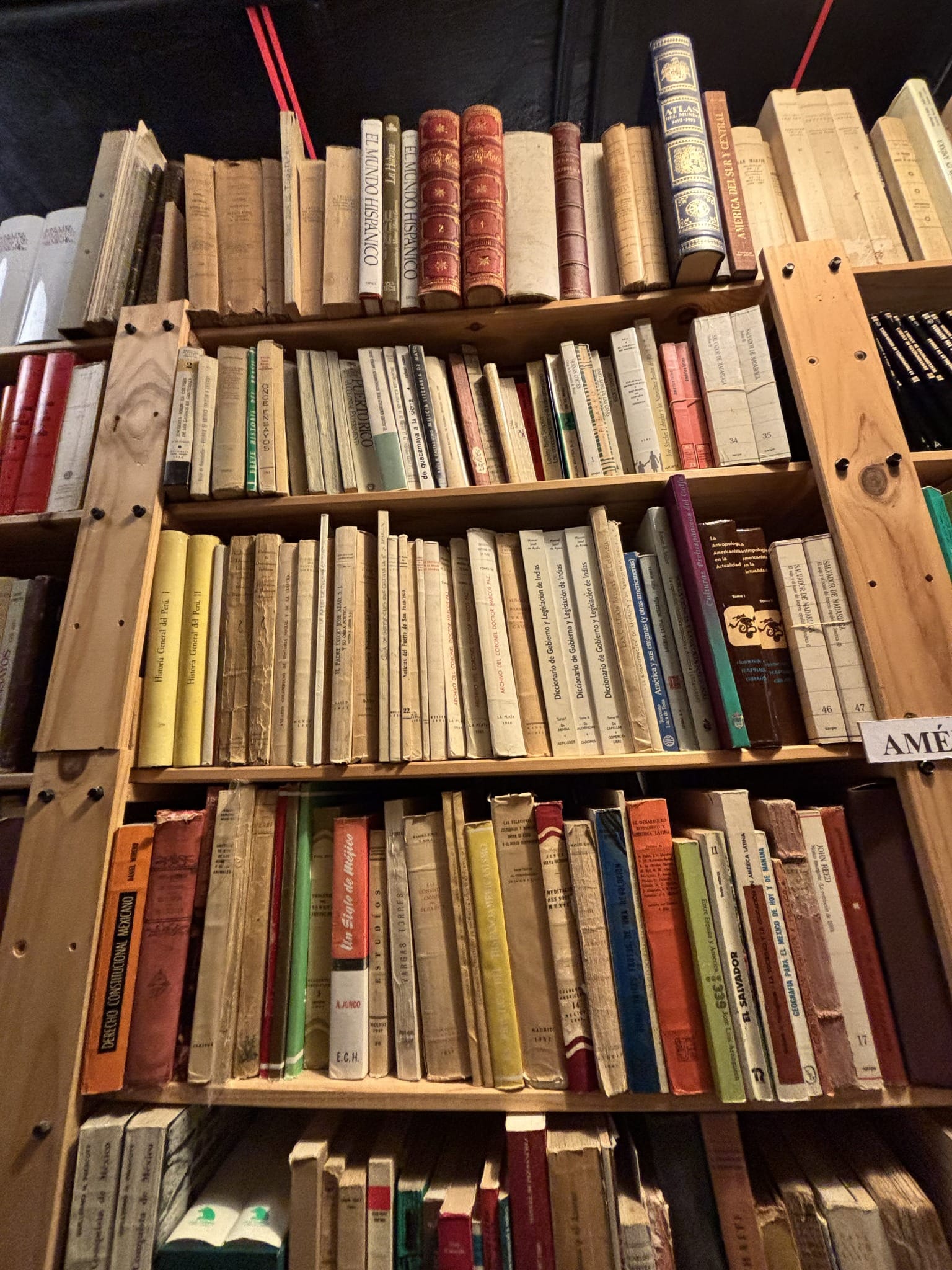
Second-hand bookshops create a particular kind of freedom. There is less pressure to follow the current conversation, to read whatever has just been reviewed or to begin with the newest edition. A subject can become interesting because a book about it happens to be within reach.
At Torreón de Rueda, the range matters as much as any single volume. The shop’s online catalogue describes interests extending across Spanish history, poetry, religion, art, literature and other fields, alongside engravings and ex libris. Its predominantly Spanish shelves can make browsing especially rewarding for readers building a relationship with the language: a title, an illustration or a familiar subject can offer an entry point without requiring a reading project to be decided in advance.
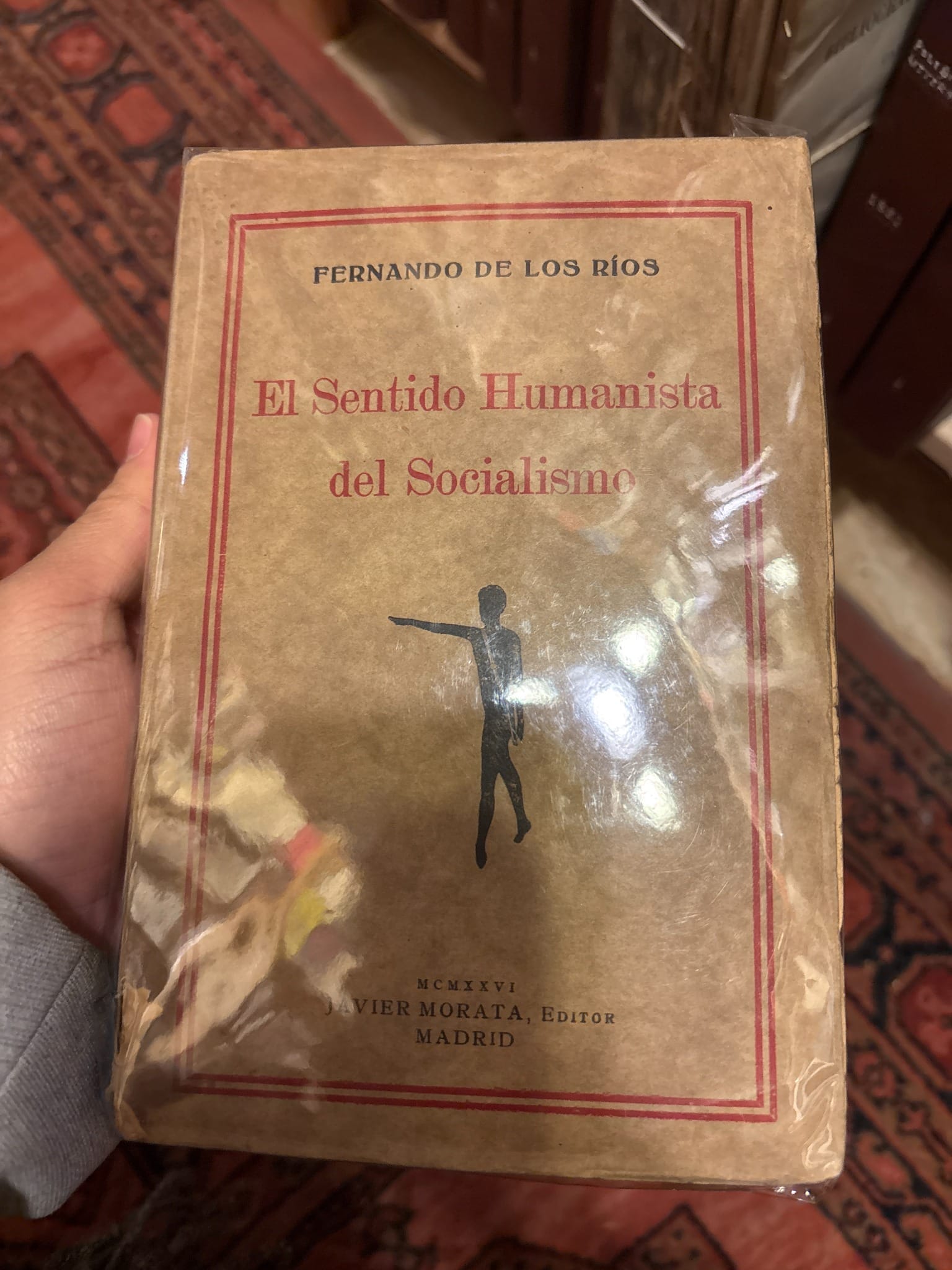
Some of the remarkable books encountered here have cost only a couple of euros. That is an observation from the experience behind this piece, not a guarantee about today’s stock or a claim that all older books are inexpensive. Antiquarian bookselling also involves scarcity, condition and specialist value. The attraction lies in the possibility of finding something personally meaningful at an accessible price.
Price alone, however, is a poor explanation of why a book stays with us. An unexpected subject, an appealing edition or the sense that a volume deserves another reader can matter more than the bargain. The pleasure is partly in recognising a reason to keep something that no search box would necessarily have helped us articulate.
Books that become part of a home
A book bought this way can acquire a second role after it leaves the shop. It may become part of a collection, something returned to occasionally, or an object that a friend notices on a shelf. “Where did you find that?” is often the beginning of another conversation.
There is no need to pretend that every purchase will be read immediately or systematically. Some books invite dipping into; others wait until a subject becomes relevant. Their presence can record a curiosity that we have not yet finished exploring. A personal library is built as much through these detours as through deliberate plans.
Torreón de Rueda also offers antiques, vintage objects and unusual collectables. They extend the experience beyond reading while keeping the emphasis on things with a past. It would be misleading to supply an inventory here: individual objects may be sold, and a second-hand shop’s selection changes. What endures is the invitation to look closely, rather than the availability of a particular find.
A different measure of local culture
Segovia’s cultural life is readily associated with monuments, museums and organised events. An independent bookshop contributes on another scale. It gives the city somewhere to encounter ideas without a programme or a starting time. Its value can be felt in an ordinary hour spent browsing, rather than in an occasion marked on a calendar.
For international residents, that offers a useful way to know a place. Books bring subjects and preoccupations into view that may not appear in a visitor’s itinerary. Even when a language slows the reading, curiosity can begin with the material object and continue later. There is no requirement to understand everything before taking an interest.
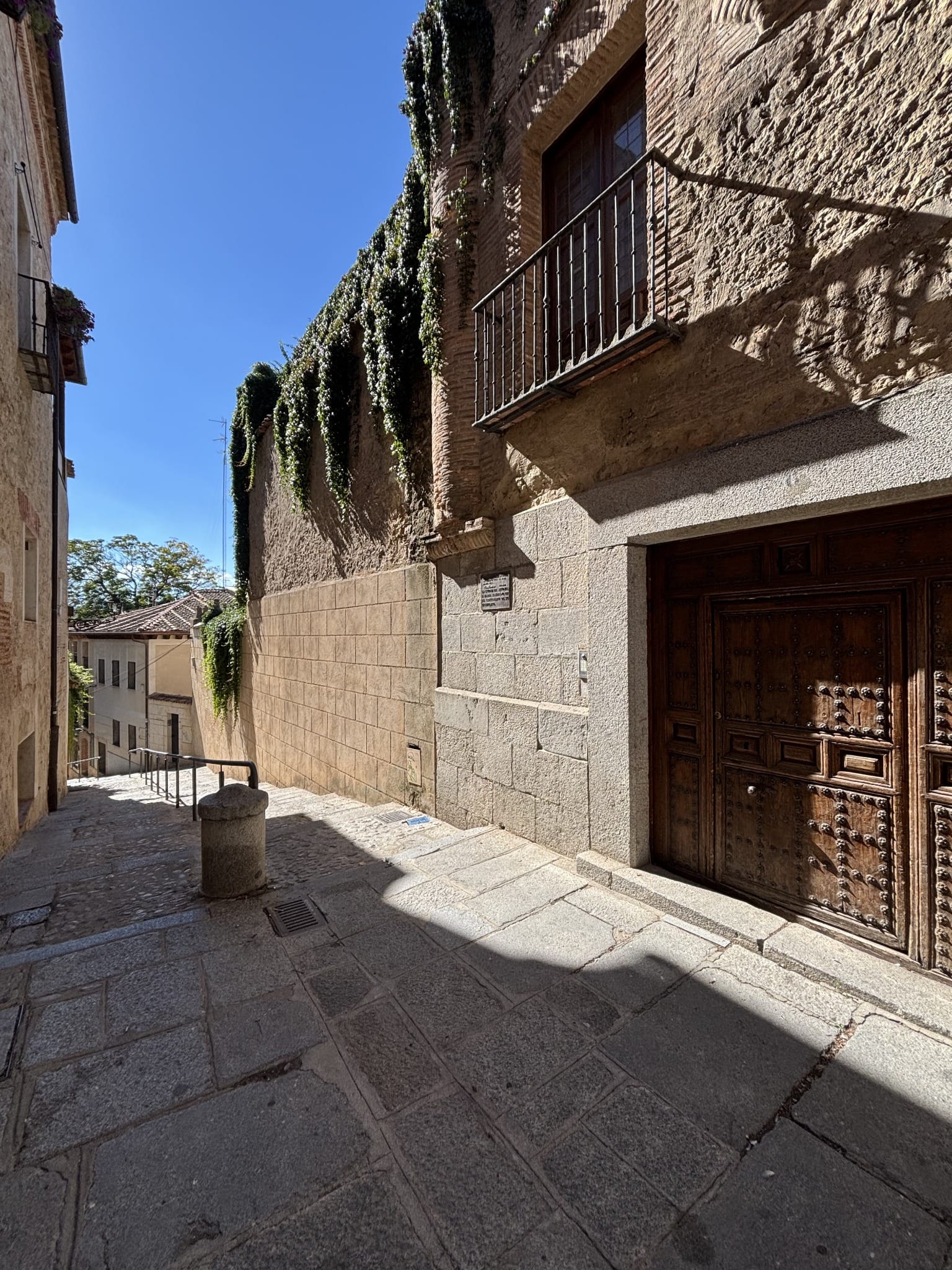
The current bookseller listing places Torreón de Rueda at Calle Grabador Espinosa 14, Segovia, behind the Casa de los Picos, and gives 921 460 529 as its contact number. Check directly before making a special journey; current opening hours have not been independently confirmed for this feature.
Leave room in the visit for uncertainty. You may come away with a book, an object, a new subject to investigate or nothing at all. The refuge is in having permission to browse without a predetermined outcome — and in finding that Segovia still has places capable of rewarding it.
Member discussion