Under the Open Sky: Passengers at Colón Bus Stop Left at the Mercy of the Weather
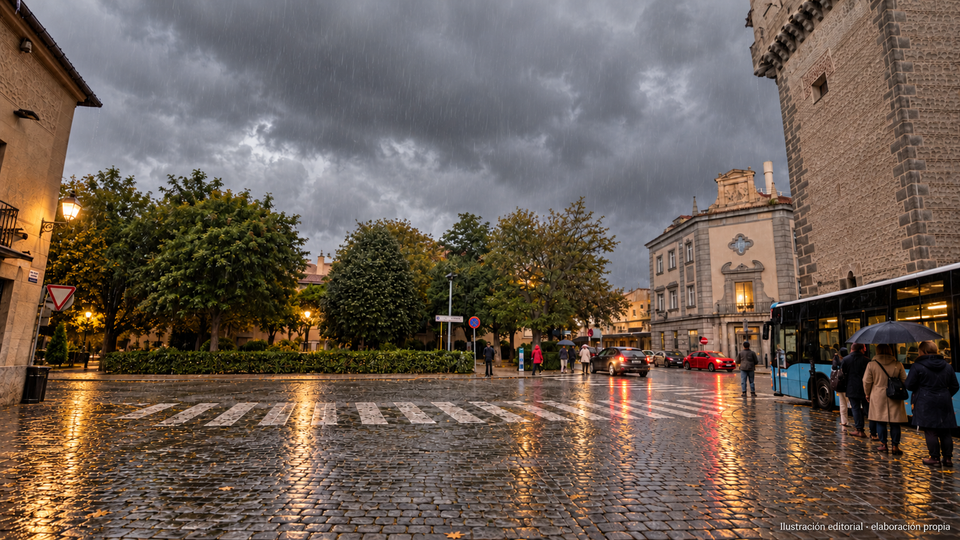
A bus journey begins before the bus arrives. It begins in the space where someone waits: with shopping bags, on the way to work, beside a child, or with a body for which standing is no longer effortless. That space tells us something about the place we live in. It reveals how closely the city has considered the ordinary needs of the people who use it.
At Colón, the question is simple. How can one of the centre’s familiar bus waiting points offer more protection from the weather, somewhere to sit, and a more comfortable experience for the people who depend on it?
Six daytime bus routes converge at Colón: lines 1, 2, 3, 5, 7 and 8. That concentration makes the quality of the waiting space a concern shared by passengers travelling to and from several parts of the city.
This is a modest question, but it deserves a serious answer. Public transport is part of daily life. Its quality is felt in the minutes spent waiting as well as in the journey itself. A dependable service and a dignified place to wait belong to the same promise.
The minutes before the journey
In good weather, waiting can feel like an unremarkable pause. When rain falls, the wind picks up or winter cold settles into the street, those same minutes take on a different weight. An umbrella can help, but it cannot provide a seat. A wall may offer a little cover, but it does not make a waiting area accessible or comfortable.
The burden is uneven. A person who can stand comfortably for fifteen minutes experiences a stop differently from someone with painful joints, fatigue or limited mobility. A parent managing a pushchair has different needs from a passenger travelling light. Someone carrying groceries may need a place to rest them. None of these needs is exceptional. Together, they describe an ordinary city.
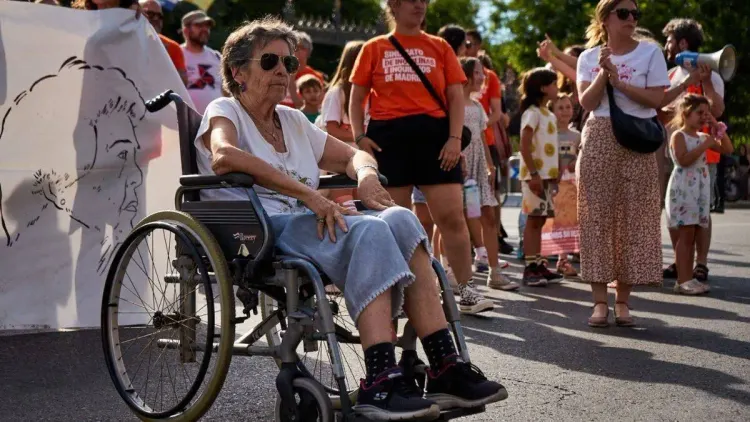
There is also a quieter question of independence. If waiting becomes physically difficult, an otherwise manageable journey can become something to avoid. A seat and effective weather protection cannot solve every obstacle to mobility, but they can make a meaningful difference to whether a person feels able to make a trip on their own.
We should therefore judge a bus stop from the position of the person who needs the most support to use it. That is a useful standard for public space: if it works well for an older resident, a wheelchair user or a family with small children, many other people will benefit too.
A historic street, a living city
Colón presents a real design challenge. Space is finite. Buses need room to approach and depart safely. Pedestrians need a clear route. Entrances must remain accessible. Any intervention should respect the character of the historic surroundings and be assessed by the people responsible for transport, accessibility and heritage.
It would be careless to assume that a standard shelter can simply be placed wherever it seems convenient. A structure that obstructs the pavement, compromises visibility or makes boarding harder could exchange one problem for another. The right solution requires measurements, an understanding of passenger movements and attention to the street as it actually functions.
Yet those constraints are a reason to design carefully. They should lead to a clear explanation of what is possible and what alternatives have been considered. If the most obvious location cannot accommodate a shelter, could the waiting arrangement be adjusted? Could a more compact design provide useful protection? Could suitable seating be introduced without narrowing the pedestrian route? These are questions for a proper assessment, rather than promises an editorial can make.
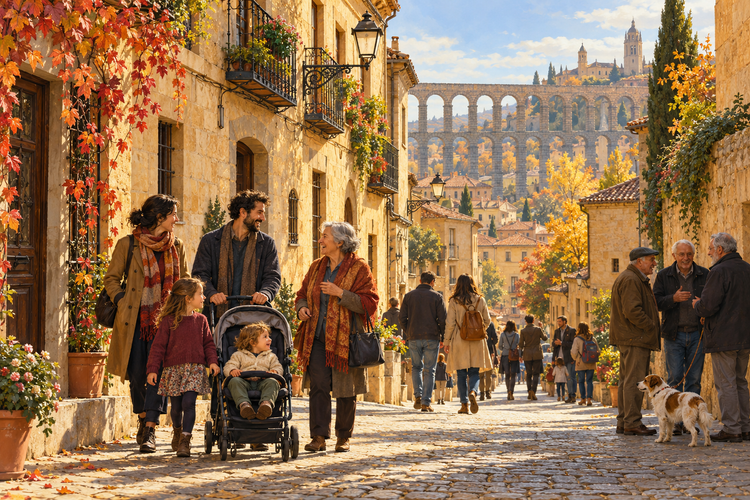
Segovia’s heritage matters because this is a place worth caring for. That care should extend to the people who continue to live their everyday lives within it. Thoughtful contemporary additions can serve those lives while respecting the setting. The ambition should be practical, restrained and durable: something that belongs in the street and works when the weather turns.
Building on the work already under way
The city has already acknowledged that the arrangement of stops and shelters matters. In its announcement of transport changes taking effect on 21 September, the Ayuntamiento described the relocation of existing shelters to other stops, with demand and interchange opportunities among the considerations. The announcement included Centro–Avenida del Acueducto, Polígono de Hontoria and CIDE.
That is relevant context. It shows that the waiting environment is part of the transport conversation. It also provides a constructive starting point for asking how Colón should be assessed within that wider work. The question is not answered simply by pointing to improvements elsewhere, but those improvements should be recognised.
Nor should the absence of a proposal in that particular announcement be treated as proof that no work or discussion exists. What would help residents is a clear account of the position at Colón: whether options have been examined, what restrictions apply, and what steps could follow. If there is already an assessment, making its conclusions accessible would move the conversation forward.
A practical next step
A useful review would begin with the people who wait there and the staff who understand how the stop operates. Drivers can explain the realities of manoeuvring and boarding. Passengers can describe where waiting becomes uncomfortable or confusing. Accessibility groups can identify barriers that a design drawing may miss. Nearby residents and businesses can help explain how the space is shared throughout the day.
From that review should come a proposal with priorities people can understand: effective protection from rain and wind where feasible; seating that is useful to those who struggle to stand; a clear pedestrian route; safe, accessible boarding; and legible information. Maintenance matters too. A shelter needs to remain clean and functional, and a seat needs to remain usable after wet weather.
If a complete intervention takes time, the city could explain whether any smaller improvement is feasible in the meantime. If constraints prevent a particular option, it could set out the alternatives. A transparent timetable for assessment would be a worthwhile beginning. Residents do not need a promise that everything is simple. They need confidence that the problem has been understood and is being addressed.
The case for improving Colón is ultimately a case for taking everyday public space seriously. Cities are experienced through small encounters repeated over years: a crossing that feels safe, a bench at the right moment, information that is easy to read, a place to wait without being left exposed.
Those details shape how welcome and independent people feel. They also influence whether public transport feels like a service designed around their lives.
Segovia can approach this with the same care it brings to the places it is proud to show the world. At Colón, that care could begin with a practical commitment: to examine the options, listen to the people who use the stop, and make waiting a little more dignified.
A city that asks people to take the bus should make room for them while they wait.

Member discussion